
Last Updated on December 4, 2025 by Heather Wibbels

A delicate, floral white sangria that tastes like summer drifting through a garden gate.
Quick Summary
English Garden Sangria is light, fragrant, and quietly elegant — the sort of drink that turns an ordinary afternoon into a small celebration. Pinot Grigio brings crisp pear and lemon notes, lavender syrup adds a soft floral lift, and elderflower or orange liqueur threads sweetness and complexity through the mix. Blueberries, grapes, and lemon slices infuse slowly, giving the wine color and brightness without weighing it down. Add a splash of seltzer at serving, and you have a breezy, sun-loving sangria that feels right at home on porches, patios, picnics, and garden parties.
Why This English Garden Sangria Works
At first glance, this is a gentle sangria — nothing bold, nothing brash — but don’t mistake subtlety for weakness. The flavor structure is purposeful. Pinot Grigio provides a neutral base with enough acidity to highlight fruit and floral notes. Its slightly mineral backbone keeps the drink tasting refreshing rather than sweet.
Lavender syrup is the aromatic anchor. It adds an unmistakable floral lift without becoming perfumy when used in moderation. Combined with elderflower or orange liqueur, the mix becomes layered: citrus brightness, spring flowers, and a hint of stone fruit. Blueberries and grapes offer quiet sweetness and soft color, while lemon slices keep the entire pitcher from drifting into overly delicate territory.
The result is a sangria that feels sophisticated but not complicated. It’s the kind of drink you pour when you want something that tastes polished and pretty without demanding attention.

What You’ll Need
Here’s your quick shopping and prep list — no amounts, just ingredients you’ll gather before making the recipe.
- Pinot Grigio
- Lavender syrup
- Elderflower or orange liqueur
- Lemon slices
- Red grapes (at least some of them sliced)
- Blueberries (slightly crushed or sliced)
- Lavender sprigs (fresh or dried)
- Orange seltzer or plain seltzer water
How the Flavor Evolves
This sangria rewards patience. On day one, the aromatics of lavender and elderflower sit forward, while the blueberries and grapes offer only faint sweetness. After a night in the fridge, everything deepens: the fruit softens, the lemon brightens, and the lavender becomes more integrated with the wine, offering layered florals on a berry base. Each element relaxes into the others.
Lavender — fresh or dried — infuses quickly, which means timing matters. Leaving sprigs in the pitcher for the entire resting period can create bitterness, so be prepared to remove them after a few hours, or once the flavor hits that soft, floral peak. You want the aromatics, not the bitterness or stewed flavors that herbs can release with extended soaking.
Blueberries are slow but steady infusers, but only when cut or slightly crushed. Even a small handful of slightly crushed berries will tint the sangria a delicate violet-pink hue, especially after the overnight rest. Grapes behave similarly; sliced grapes infuse faster, while whole grapes maintain texture longer.
By the time you’re ready to serve, the pitcher tastes like sunshine, flowers, and cool white wine — simple ingredients transformed by time.
Tips & Tricks for a Better Floral Sangria
Floral sangria is all about balance. These tips help keep the drink fragrant, refreshing, and crystal clear in flavor:
- Use a gentle hand with lavender. A little is lovely; too much overwhelms. If you’re sensitive to florals, cut the lavender infusions in half.
- Remove lemon slices after the first day to prevent the pith from creating bitterness.
- Slightly crush or slice the blueberries to encourage color and flavor release.
- Taste after resting — floral ingredients continue to evolve even when chilled.
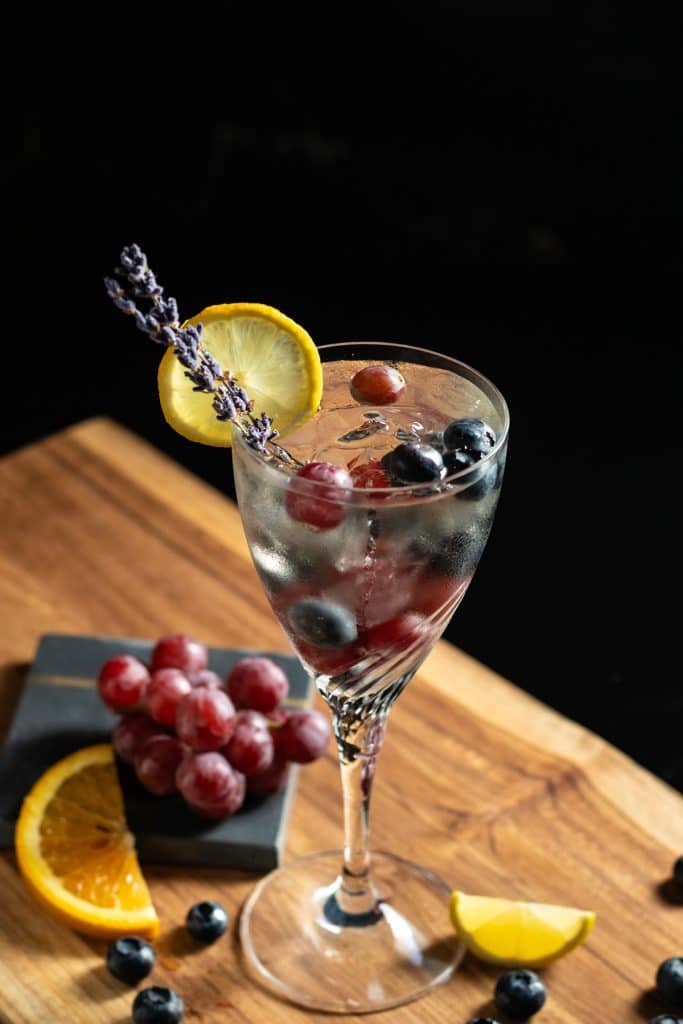
- Garnish with fresh lavender or edible flowers for a visually stunning pour.
These small adjustments elevate the sangria without adding steps or fuss.
Variations to Try
Here are a few ways to adapt the sangria depending on mood, season, or crowd:
- Alternate florals: Pivot to honey rose syrup with rose petal infusions, or dried hibiscus for alternate florals if you’re not a fan of lavender.
- More citrus: Replace some of the lemon with thin orange slices for a slightly sweeter, less acidic sangria
- Richer texture: Use a splash of elderflower tonic instead of seltzer, but this will add considerable bitterness to the sangria
- Sweeter: Add another tablespoon of lavender syrup or a bit more liqueur.
Each variation keeps the drink airy and garden-forward.
Other Cocktails You Might Like
Recommended Bar Tools
You don’t need every slick, beautiful bar tool out there, but there are several I’ll recommend. (As an Amazon Associate I earn from qualifying purchases. However, that does not affect the cost of the items below.) My favorite pieces usually come from the Cocktail Kingdom section of Amazon:
You may already have these bar essentials, but just in case:

Summer Floral Sangria Recipe

Ingredients
- 1 bottle Pinot Grigio
- ¼ –½ cup lavender syrup***
- 2 oz orange liqueur or elderflower liqueur
- 2 lemons, thinly sliced
- ½ cup red grapes, sliced
- 1 cup fresh blueberries, cut or slightly crushed
- A few sprigs fresh or dried lavender
- 1 cup orange seltzer water optional
Instructions
- Add the Pinot Grigio, lavender syrup, liqueur, lemon slices, grapes, blueberries, and lavender sprigs to a large pitcher.
- Stir gently and taste; adjust sweetness or acidity as needed.
- Cover and refrigerate 12–24 hours to allow fruit and florals to infuse.
- Remove lavender and lemon slices if storing beyond 24 hours.
- Add seltzer just before serving to keep the bubbles lively.
- Serve in an ice-filled wine glass, spooning fruit into each glass.
- Garnish with a fresh lavender sprig or edible flowers.
Notes
- 1 cup sugar
- 1 cup water
- 2 tablespoons dried culinary lavender
